Jokhang Temple
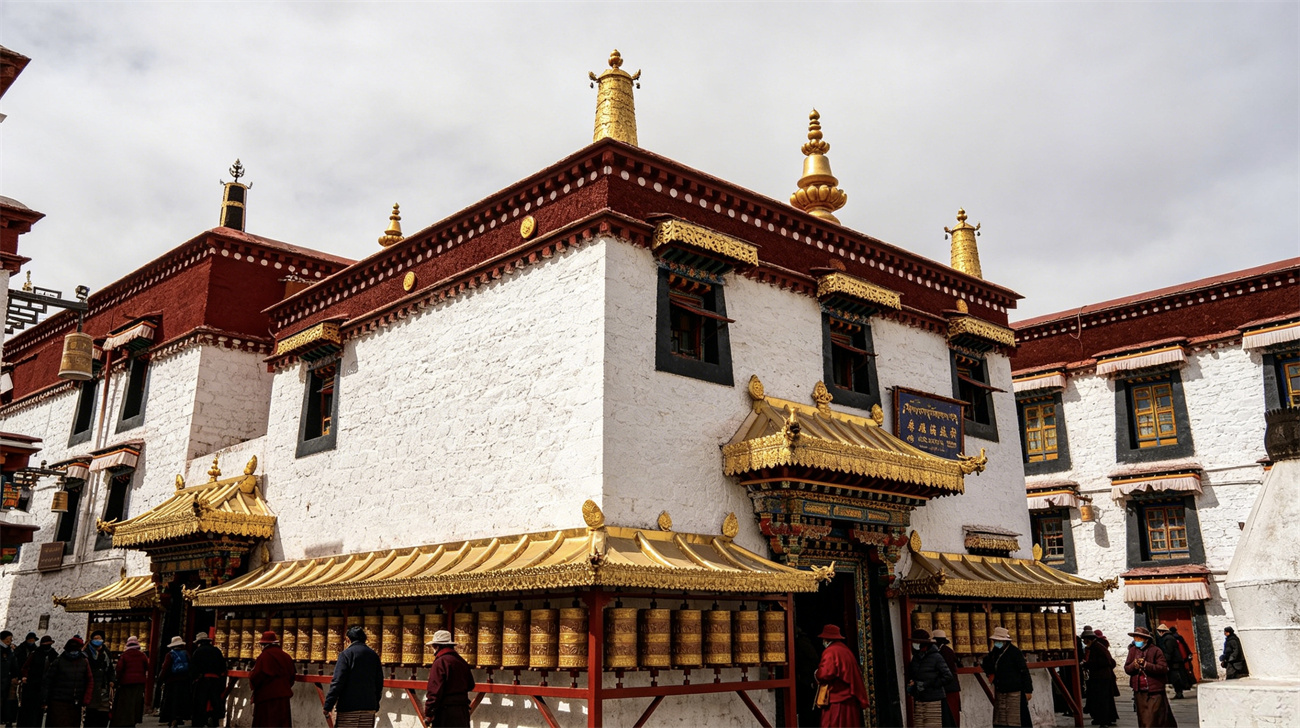
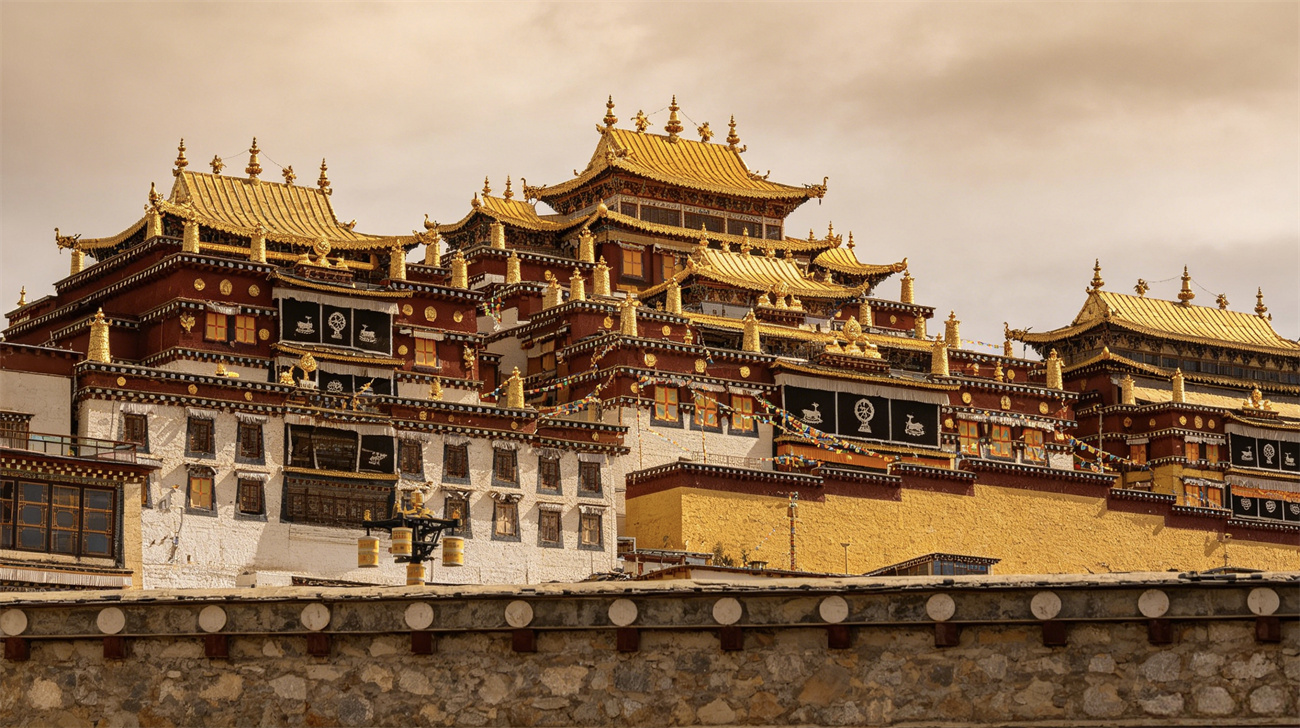
Nestled at the heart of the Barkhor Street in old-town Lhasa, Xizang Autonomous Region, Jokhang Temple sits 3,650 meters above sea level. Its Tibetan aliases Rasa Trulnang mean “Palace of Transcendental Enlightenment”. First founded in 647 AD (the 21st year of the Zhenguan Reign of the Tang Dynasty) under the patronage of King Songtsen Gampo of the ancient Tubo Kingdom, the temple boasts over 1,300 years of history.As Xizang’s best-preserved Tubo-dynasty edifice and the region’s earliest civil timber-frame architecture, it houses the Administrative Office of Xizang Autonomous Region Religious Affairs. Covering a total construction area of more than 25,100 square meters after expansions across the Tang, Yuan, Ming and Qing dynasties, it has inspired the local adage: “First came Jokhang, then grew Lhasa”, cementing its status as the spiritual and urban core of Lhasa.
Founded in traditional Tibetan monastery layout with an eastward-facing main structure built along a central axis, Jokhang synthesizes four major architectural aesthetics: indigenous Tibetan, Tang-dynasty Chinese, Nepalese and Indian styles, standing as the pinnacle of Xizang’s religious construction art.
• Layout Composition: The compound consists of the entrance gateway, Buddha Hall courtyard, principal Buddha shrine and surrounding storage wing buildings; most buildings span two to four stories, arranged symmetrically north-south.
• Structural Craft: The main shrine features square plane layout retaining authentic Tubo architectural prototype; its gilded bronze roof adopts Han-style hip-and-gable roof form while wooden brackets carry distinctive Nepalese & Indian design language. Elaborate craftsmanship is reflected on wooden beams, murals and decorative sculptures.
• Wall Color System: Dominated by white, crimson and golden yellow hues, a quintessential representative of classic Xizang architectural color aesthetics.
The main shrine enshrines the life-sized Buddha Sakyamuni statue at age twelve, which was brought to Xizang by Princess Wencheng and ranks as the most sacred icon in Tibetan Buddhism. Side halls on both sides house the statues of King Songtsen Gampo, Princess Wencheng and Princess Bhrikuti.
Erected in front of the temple are the Sino-Tubo Alliance Stele (carved in 823 with inscriptions in both Chinese and Tibetan), the Princess’ Willow and the Smallpox Vaccination Stele, all serving as tangible historical evidence testifying to centuries-long amity and cultural exchanges between Han and Tibetan peoples.
IV. Cultural Relics & Fine Arts
1. Core Sacred Statue
The 12-year-old Sakyamuni Buddha statue introduced by Princess Wencheng remains the most venerated Buddhist icon of Xizang, receiving perpetual incense offerings year-round.
2. Mural Art
Preserved murals spanning from Tubo to late Qing dynasties cover a total area of over 1,300 m², depicting Buddhist tales, historical episodes and local folk customs. Standout masterpieces include Princess Wencheng’s Entry into Xizang and Founding of Jokhang Temple, still vivid in color after centuries.
3. Tang-Tubo Alliance Stone Stele
Positioned on the front courtyard, this 823 AD monument records peaceful diplomatic history between Tang Empire and Tubo Kingdom, an irreplaceable physical artifact testifying to ethnic solidarity and amity between Han and Xizang peoples.
Jokhang Temple serves as the supreme common pilgrimage sanctuary revered by all sects of Tibetan Buddhism, holding an unparalleled eminent position within the faith.
Centered on Jokhang Temple, two sacred circumambulation routes have gradually taken shape: the inner Nangkhor Path and the outer Barkhor Path, from which Barkhor Street originated. This entire precinct has evolved into the core hub of Tibetan circumambulation and pilgrimage culture.