Potala Palace
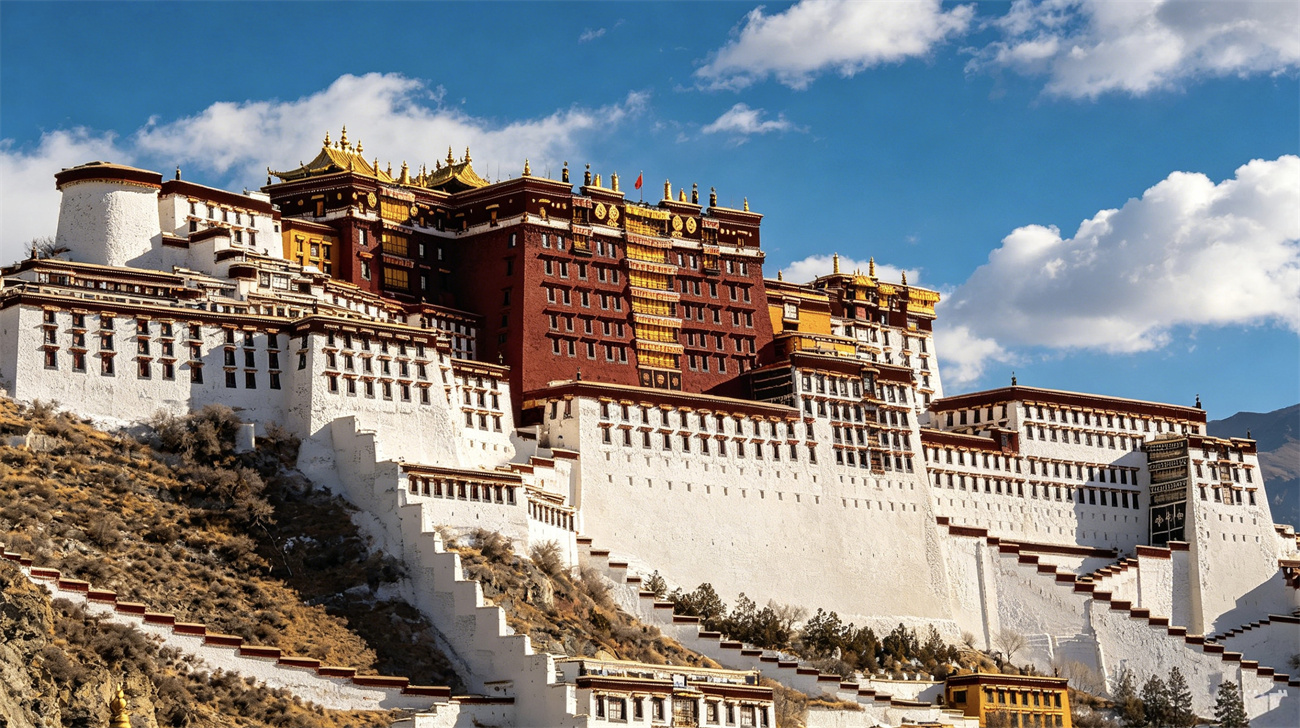
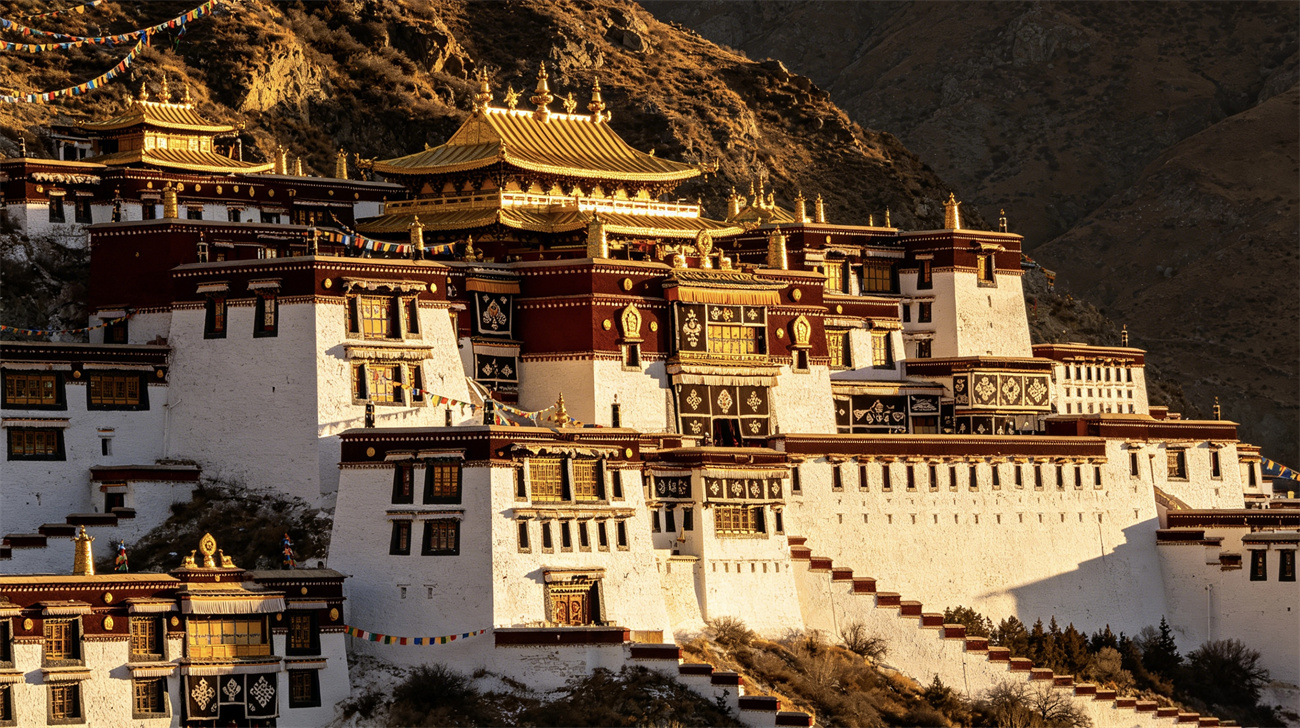
Located at No.35 North Central Road, Chengguan District, Lhasa, Xizang Autonomous Region, the Potala Palace perches atop Red Hill at an elevation of 3,700 meters, hailed as the Pearl atop the Snowland and one of the world’s most remarkable high-altitude palace complexes, also a core sacred site of Xizang Buddhism.
• Construction Scale: Covering a total floor area of 130,000 sq.m., the main building appears as a 13-story edifice yet actually contains 9 inner levels, clinging tightly to the mountain cliff with grand and imposing momentum.
• Core Composition: Structurally split into three major zones: White Palace, Red Palace and subsidiary precincts including Dragon King Pool (Linka) at the foot of the rear mountain.
• White Palace: With whitewashed outer walls, it used to serve as the administrative and residential quarter for local Xizang authorities.
• Red Palace: Featuring crimson outer walls at its central core, it enshrines stupas, Buddha statues, thangka scrolls and precious sacred relics for religious worship.
• Snow Compound: Situated in the front foothill zone, it preserves former government offices, workshops and treasure repositories.
Spanning 13 centuries of construction history, the Potala Palace stands as solid historical evidence of exchanges, interactions and cultural integration among China’s diverse ethnic groups. During its large-scale expansion in the 17th century, craftsmen of Tibetan, Han and multiple other ethnicities worked jointly, incorporating diversified architectural craftsmanship and cultural aesthetics from varied civilizations.
Housing an enormous assemblage of state-level cultural relics, the palace preserves imperial edicts, investiture decrees and official imperial seals issued by emperors of the Ming and Qing dynasties, alongside thangka scrolls, Buddha statues, Buddhist scriptures, gold & silver artifacts and ancient silk textiles. Functioning as an invaluable treasure trove for research on Xizang’s history, religion and fine arts, these artifacts also provide conclusive physical proof that Xizang has been an inalienable part of China’s territory since ancient times.
• Precious Collections: More than 115,000 pieces of curated relics: Buddha sculptures, murals, ancient scriptures, gold-gilded imperial stupas from Ming & Qing dynasties as well as jade and porcelain artifacts, recording profound historical bonds between central China and Xizang.
• Historical Implication: Epitomizing centuries of inter-ethnic exchanges, it is the authoritative physical evidence that Xizang has been an inalienable part of Chinese territory from ancient times.
1. Snow Compound (Front Entrance Area): Equipped with treasure exhibition halls, cultural stores, interpreter stations and catering amenities for pre-tour historical briefing.
2. Zigzag Stone Stairway: Ascending winding stone steps uphill to the White Palace Gate, a classic spot for panoramic photography of the palace.
3. White Palace & Red Palace (Core Scenic Belt): Sequential visits to scripture halls, Buddha shrines, stupas and mural corridors where religious and cultural essence of the complex concentrates.
4. Dragon King Pool (Linka Garden): A rear-mountain alpine garden centered around a mountain lake with serene natural scenery, the exclusive imperial garden of Potala Palace.
Known as the “Museum of Xizang’s History”, the Potala Palace houses an extensive collection of state-level cultural relics featuring diverse categories and exceptional historical value.
1. Sculptures & StatuesThe Red Palace is adorned with elaborate inlay craftsmanship using gold, silver, gemstones and jade, representing the pinnacle of traditional handicraft art. Tens of thousands of exquisite statues crafted from gold, silver, bronze, clay and timber are preserved across the palace compound.
2. MuralsCovering a total area of over 2,500 square meters, the palace murals depict Buddhist legends, pivotal historical episodes, local folk customs and biographical stories. Their pigments remain vivid and bright after centuries, ranking as the quintessential masterpiece of traditional Xizang mural art.
3. Thangka Paintings, Scriptures & Historic DocumentsThe collection encompasses thousands of precious thangka scrolls, vast volumes of Buddhist scriptures written in Sanskrit, Tibetan and Classical Chinese, as well as imperial investiture edicts, official seals, horizontal inscribed boards and silk textiles issued by China’s central governments of the Ming and Qing dynasties. These invaluable artifacts serve as definitive physical evidence proving that Xizang has been an inalienable part of China since ancient times.